Knowledge Engineering for Planning and Scheduling
KEPS 2026
Workshop at the 36th International Conference on Automated Planning and Scheduling (ICAPS)
Room 9 at Clayton Hotel Burlington Road, Dublin, Ireland
9:00 a.m. - 5:30 p.m., June 28th 2026





The reference timezone for all deadlines is UTC-12. That is, as long as there is still some place anywhere in the world where the deadline has not yet passed, you are on time!
March 10th, 2026
March 17th, 2026
April 16th, 2026
April 24th, 2026
May 20th, 2026
Despite the progress in automated planning and scheduling systems, these systems still need to be fed by carefully engineered domain and problem descriptions and they need to be fine-tuned for particular domains and problems. Knowledge engineering for AI planning and scheduling deals with the acquisition, design, validation, and maintenance of domain models, as well as the selection and optimization of appropriate machinery to work on them. These processes directly influence the success of real-world planning and scheduling applications. The importance of knowledge engineering techniques is clearly demonstrated by the performance gap between domain-independent planners and planners that exploit domain-specific knowledge.
This workshop continues the tradition of several International Competitions on Knowledge Engineering for Planning and Scheduling (ICKEPS) and previous KEPS workshops. While ICKEPS primarily focuses on software tools and domain encoding techniques, this workshop covers all aspects of knowledge engineering for AI planning and scheduling.
Two types of papers can be submitted. Full technical papers with the length up to 8 pages + 1 for references, are standard research papers. Short papers with the length between 2 and 4 pages (+1 for references) describe either a particular application or focus on open challenges. All papers must be submitted in PDF format and must conform to the AAAI style template.
Policy on Previously Published Papers: we welcome submissions based on recent publications from other (non-ICAPS) venues such as specialized conferences (e.g., AAMAS, ICRA, KR) or general AI conferences (e.g., AAAI, IJCAI, ECAI). Such submissions must clearly indicate the original venue. Submissions currently under review elsewhere are also welcome since the workshop is a non-archival venue. No copyright transfer is required. If the paper is under double-blind review at another venue, please anonymize the submission.
Workshop Introduction
09:00 – 09:10
09:10 – 10:30
Are We There Yet? Bridging the Knowledge Acquisition Gap in Automated Planning
Roman Barták, Lukáš Chrpa, Simona Ondrčková, Kristýna Pantůčková
Automatically Uncovering Intended Domain Constraints in Automated Planning
Elliot Gestrin, Johannes Fichte, Jendrik Seipp
Predicting Macro-Learning Performance Using Structural Regularity
Anton Gustafsson, Jendrik Seipp, Elliot Gestrin
JUS: Extending SIFT to Learn Planning Domains from Justified Plans
Alexander Lodemann, Michael Ventura, Gregor Behnke, Birte Glimm
On the Use of Large Language Models as Domain Model Configurators
Ilche Georgievski, Daniel Elis, Mauro Vallati
Offline Learning of Planning Domains with Subsymbolic Predicates Invention
Leonardo Lamanna
Coffee Break
10:30 – 10:50
10:50 – 12:40
Planning while Learning with Anytime Sound and Complete Models
Pablo Copete, Diego Aineto, Eva Onaindia, Enrico Scala
Planning with Uncertain Action Models
Francesco Percassi, Alessandro Saetti, Enrico Scala
Automated Planning with Incomplete Open World Models
Mikhail Soutchanski
Configuring Lifted Initial States for Classical Planning
Alba Gragera, Raquel Fuentetaja, Ángel García-Olaya
Incremental Planning over Lifted Abstractions
Michelle Kornherr, Daniel Gnad, Zeynep G. Saribatur, Johannes K. Fichte
Alberto Pozanco, Marianela Morales, Pietro Totis, Daniel Borrajo
Optimal Parity Resolution in Difference Models via Numeric Planning
Luigi Bonassi, James Wilson, Ruth Chang, Kit Fine, Nick Hawes
Ryan Farish, Emanuele De Pellegrin, Ron Petrick
Lunch Break
13:00 – 14:30
14:30 – 16:00
Extracting Structural Knowledge from Precedence-Induced Betweenness Patterns in Scheduling Problem
Isabel Català, Christian Pérez, Miguel A. Salido
The Role of Knowledge Engineering within a Fielded Planning Application
Lee McCluskey, Alan Lindsay, Mauro Vallati, Keith McCabe
Distribution Network Transition Problem: A Planning Knowledge Model Capturing Structural Constraints
Francesco Percassi, Sandra Castellanos-Paez, Mauro Vallati, Marie-Cécile Alvarez-Hérault
On the Use of AI Planning for Water Management of the Red River Basin in Vietnam
Diego Aineto, Nicola Bettinzoli, Ngo Le An, Enrico Scala, Ivan Serina
Modeling Challenges in Procedure Synthesis for Earth Independent Anomaly Response
J. Benton, Irina Kostitsyna, Richard Levinson, Alison Paredes
Medical Procedure Tracking using Abductive Planning — A PARADIGM Shift
Michael Wessel, Michael Cogswell, Jason Tyan, Bob Price
Coffee Break
16:00 – 16:20
16:20 – 17:30
When Can Planning Benefit from Common-Sense Knowledge?
Ma'Ayan Armony, Albert Meroño-Peñuela, Gerard Canal
Dynamic Scene Reconstruction for Planning Environments
Albaraa Othman, Prab Singh, Emanuele De Pellegrin, Maria Koskinopoulou, Ron Petrick
OOMPA 2025.08: A First Cut of the Toolkit for Object-Oriented Modeling for Planning and Acting
Mark Roberts, David Chan, Dana Nau, Jamie Macbeth
Structuring World State Knowledge for Multi-UAV Automated Planning
Kai Sommer, Jean Jane Kiam
maPO: An Ontology for Multi-Agent Path Finding and Its Usage for Explaining Planner Behaviour
Bharath Muppasani, Ritirupa Dey, Biplav Srivastava, Vignesh Narayanan
Closing
17:25 – 17:30
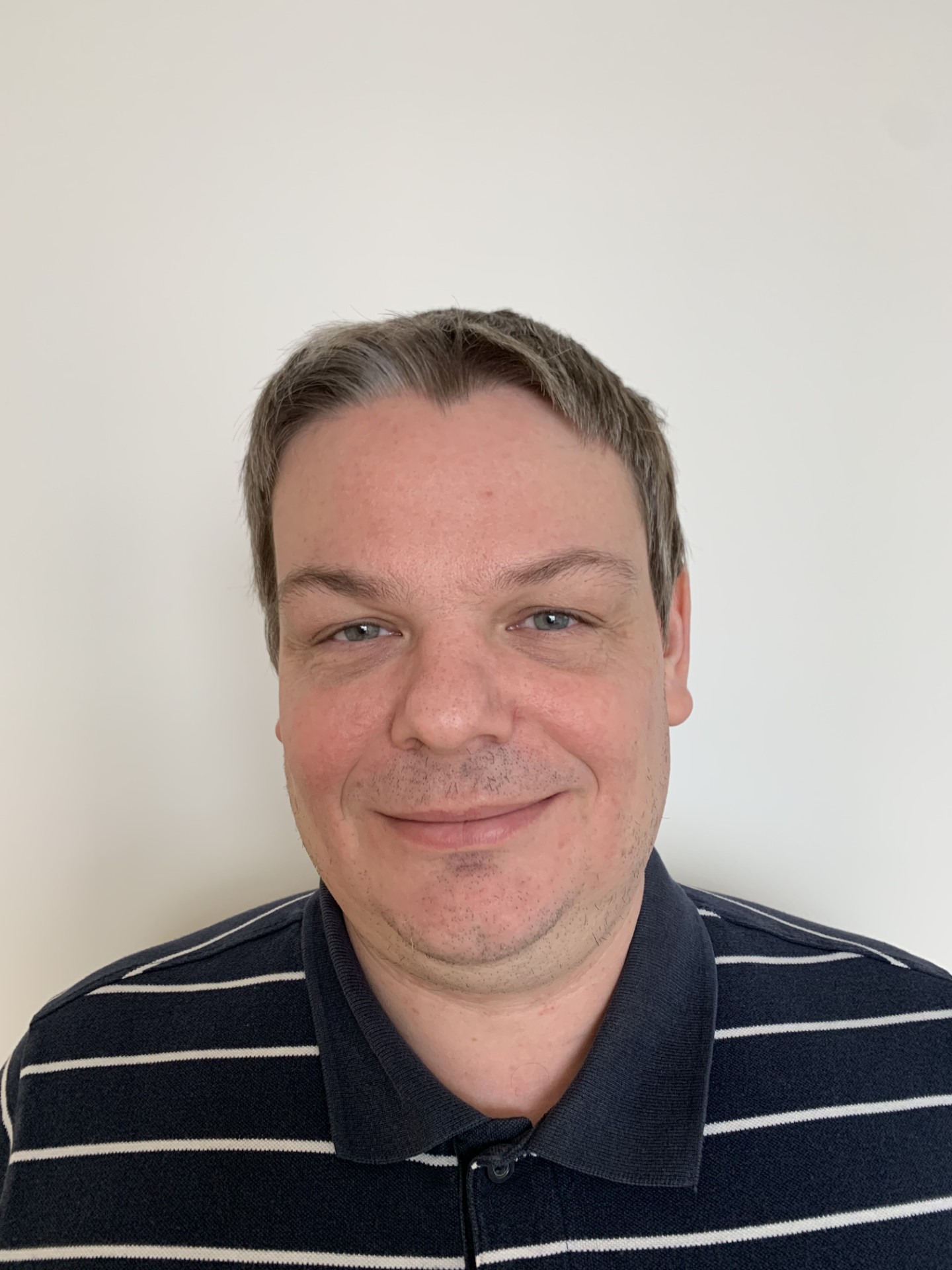
Czech Technical University
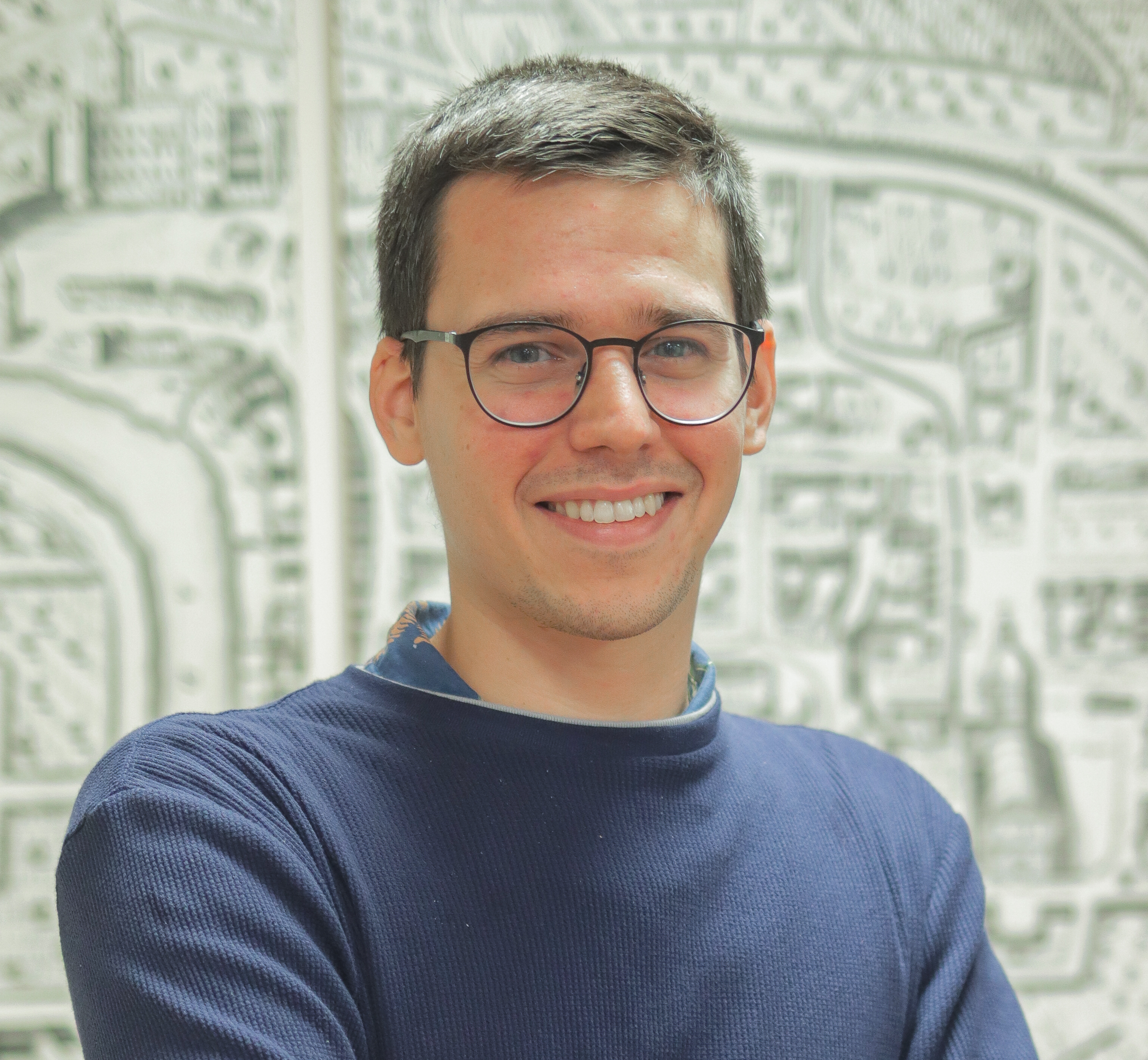
Fondazione Bruno Kessler
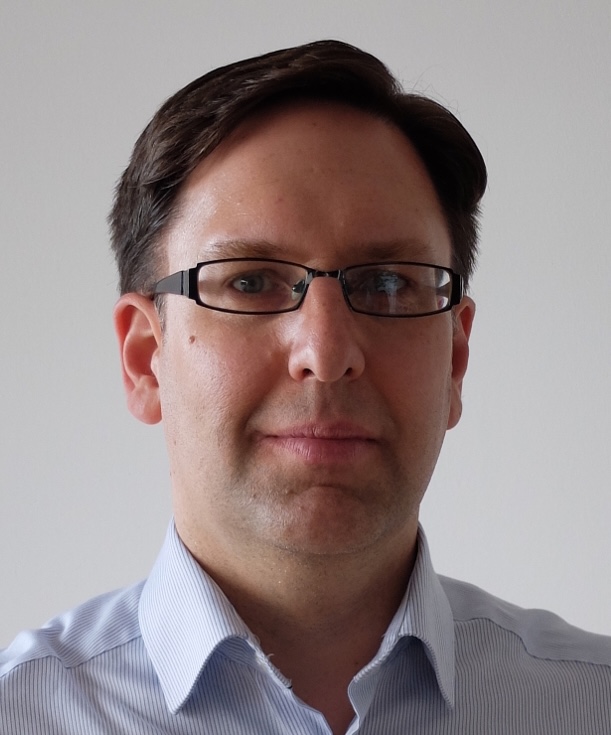
Heriot-Watt University
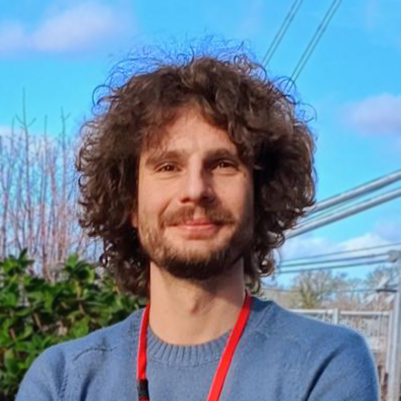
University of Huddersfield
NASA JPL, Caltech
Diego Aineto
Universitat Politècnica de València
Roman Barták
Charles University
Luigi Bonassi
University of Oxford
Matteo Cardellini
Università degli Studi di Genova
Sandra Castellanos-Paez
Grenoble Computer Science Laboratory, Université Grenoble Alpes
Lukáš Chrpa
Czech Technical University in Prague
Emanuele De Pellegrin
University of Edinburgh
Susana Fernandez
Universidad Carlos III de Madrid
Mary Ellen Foster
University of Glasgow
Jeremy Frank
NASA
Richard Freedman
Smart Information Flow Technologies, LLC
Raquel Fuentetaja
Universidad Carlos III de Madrid
Alba Gragera
Universidad Carlos III de Madrid
Lorenzo James
IESEG School of Management
Alessandro La Farciola
Fondazione Bruno Kessler
Leonardo Lamanna
Fondazione Bruno Kessler
Lee McCluskey
University of Huddersfield
Eva Onaindia
Universitat Politècnica de València
Andrea Orlandini
CNR
Simon Parkinson
University of Huddersfield
Francesco Percassi
University of Huddersfield
Ron Petrick
Heriot-Watt University
David Smith
Independent
Roni Stern
Ben Gurion University of the Negev
Elisa Tosello
Fondazione Bruno Kessler
Mauro Vallati
University of Huddersfield
Tiago Vaquero
NASA Jet Propulsion Laboratory, Caltech